

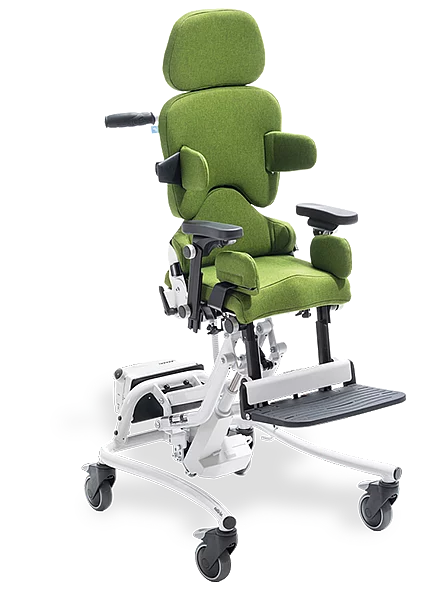
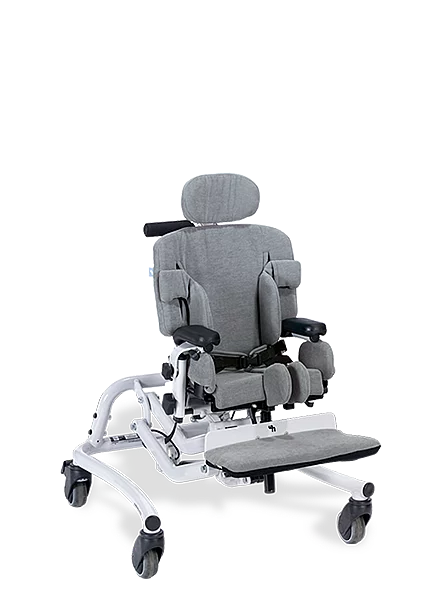
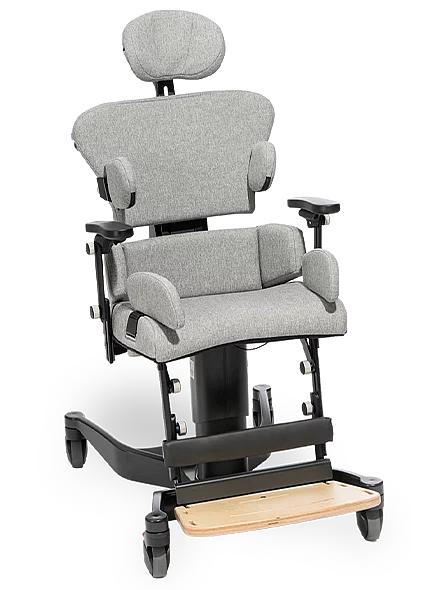
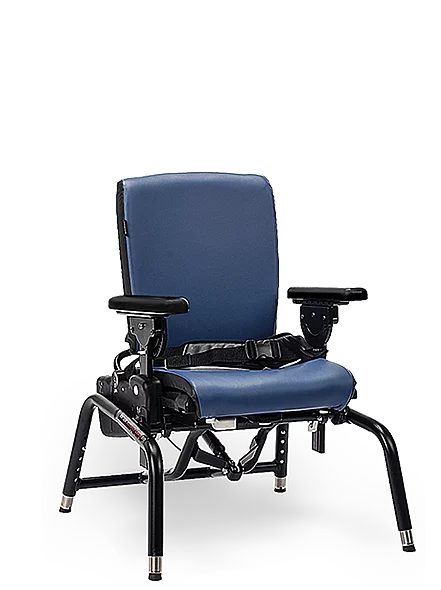











What should you look out for when buying a rehabilitation car seat? Find out more in this guide.
Many children with motor impairments have special support needs when sitting and are therefore unable to use standard child car seats or restraint systems or can only do so to a limited extent. Rehabilitation car seats offer additional support with positioning. Additional seat belts, footrests, armrests, padding and support pads help to position the pelvis, upper body and head so that the child can sit as upright and comfortably as possible, ensuring they travel safely in the car.
The seat must meet all the requirements for the child and their family
There are various categories of car seats for different sizes. It is important that the child is neither too small nor too big for the car seat and that their head does not protrude above the headrest. As the child grows, the car seat should be able to grow with them. The seat belts must fit snugly against the body and the child should feel comfortable in the seat.
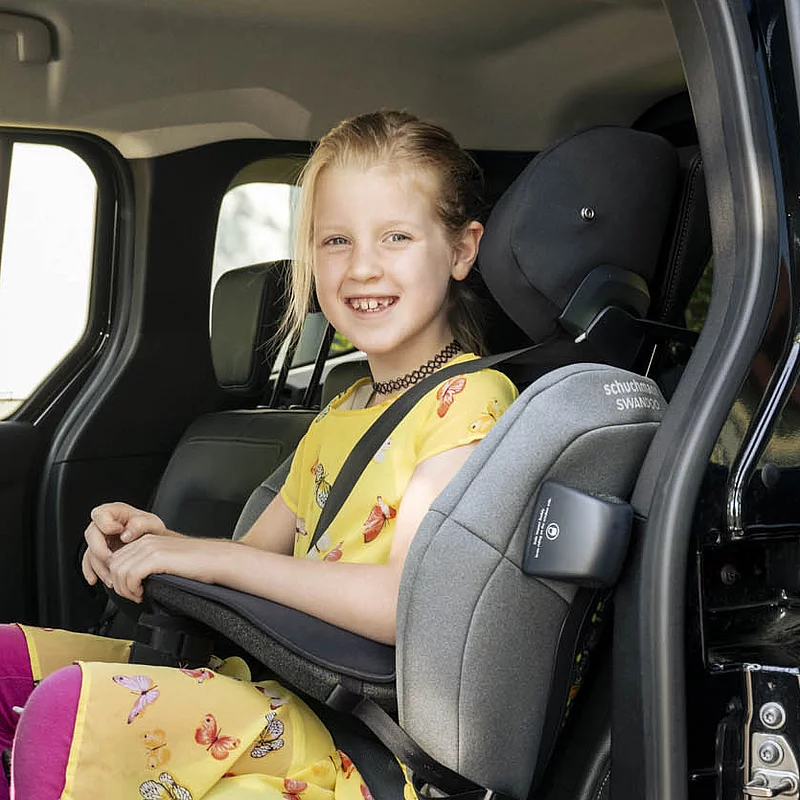
A rehabilitation car seat should meet the child’s support needs. To ensure the child can travel comfortably and safely in the car, the car seat should promote an upright and symmetrical sitting posture. How this is best achieved varies from child to child. In addition to lateral support pads for the pelvis and upper body, an armrest can help with maintaining an upright posture. Positioning jackets or harnesses can provide even further support for the upper body, particularly in car seats for taller children that do not have an integrated 5-point harness. A footrest can also be helpful for taller children, providing a good base for maintaining an upright posture. And children who sit upright are not only well protected, but are also more aware of their surroundings. Particularly for children with poor head control, good head support – for example, via adjustable headrests or a support cushion – is also important. Furthermore, for children with limited head control, it is advisable to choose a car seat that allows them to travel rear-facing for as long as possible (rear-facing). This is because the head is well protected during any braking manoeuvre and in the event of a head-on collision, as it is pressed against the backrest. With forward-facing car seats, on the other hand, the head lurches forwards with every braking manoeuvre.
Car seats make everyday life easier
In everyday life, a car seat must, above all, be practical. The seat should fit well in the car and be easy to use. Depending on how often the seat needs to be moved between different cars, particular attention may need to be paid to its weight and the complexity of installation. Many car seats swivel, making it easier to transfer the child in and out, which can be a great help in everyday life. Magnetic features that hold the straps in place when getting in and out of the seat also save you a lot of hassle.
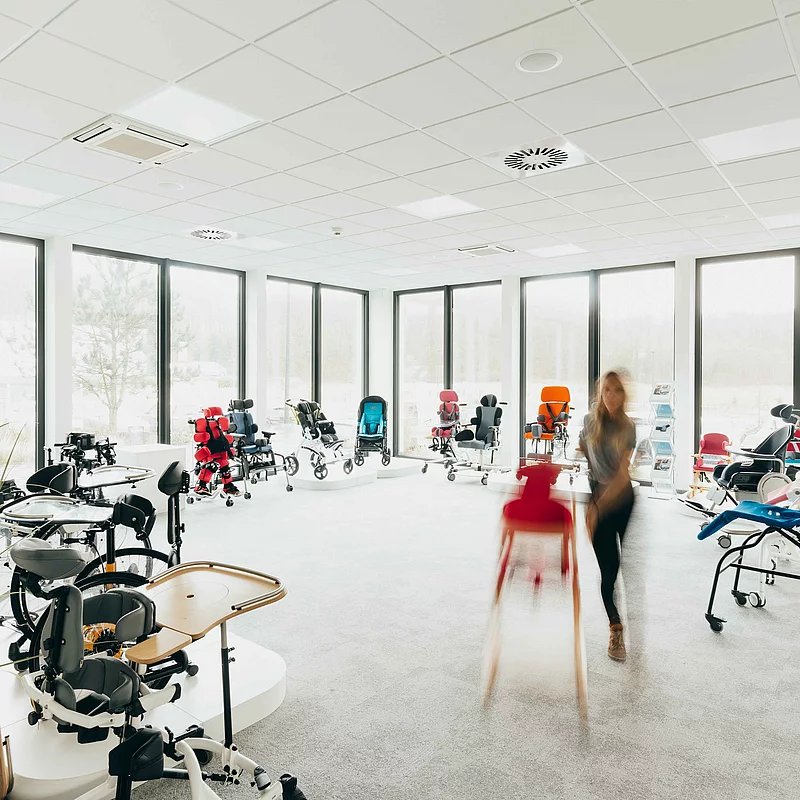
The best way to find out is to try it. Before deciding on a rehabilitation car seat, you should familiarise yourself with its features and try it out to see if the seat is a good fit for your child and family. To this end, we hold a test and trial day once a month. Here, all our products can be tried out and put through their paces.
Safety first – car seats must be approved
As described in a previous post, currently only car seats that have been tested and approved in accordance with ECE R129 may be manufactured and sold. A partial test or a ‘test based on’ is not sufficient. Successful certification is indicated by the orange label. In addition to the product name, the car seat category, user height and, where applicable, weight, the label shows the car seat’s approval number in accordance with ECE R129, the country of approval and the car seat’s serial number. For rehabilitation car seats, the approval number ends with the letter ‘S’. This stands for ‘restraint systems for special needs’. ECE R129 permits additional restraint devices for such car seats, such as belts for each part of the child’s body. These are intended solely for positioning and do not replace the ‘primary restraint system’ – for example, the ISOFIX system and the 5-point harness of an infant carrier, or the vehicle’s own three-point harness – which are used to secure the child and the car seat. These accessories have therefore been tested and have met the strict safety requirements of ECE R129.
A car seat as an aid
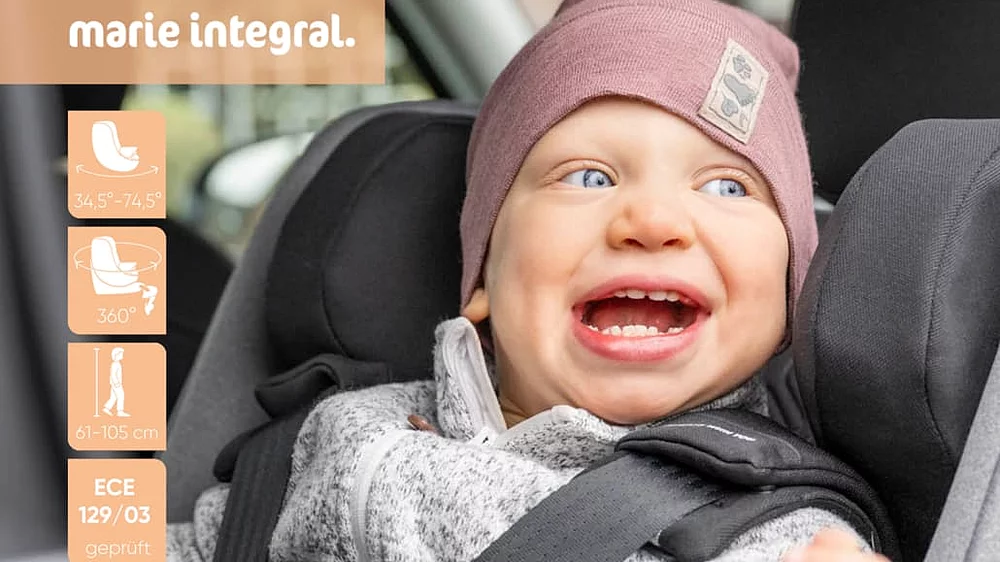
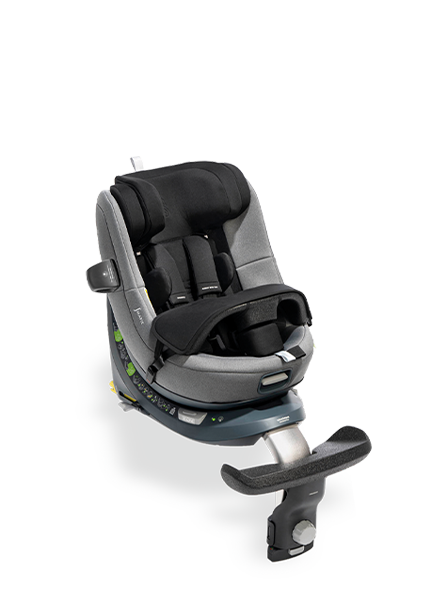
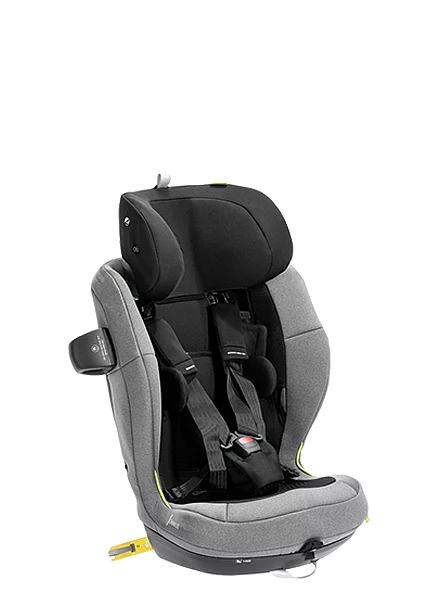
Our marie integral and charlie integral rehabilitation car seats are not only car seats and approved as such, but are also medical devices within the meaning of the Medical Devices Regulation (MDR) and, in addition to the ECE R129 marking, bear the CE mark for medical devices. These car seats are medical devices which, thanks to their special features, counteract difficulties with sitting and enable the most physiological seat position possible during car travel. If a child requires this support (as confirmed by a doctor’s prescription), the health insurance provider must approve the provision. Specialist rehabilitation retailers can assist with selecting the appropriate seat and will submit the documentation to the health insurance provider for approval.
Medical aid number simplifies the application process
Some rehabilitation car seats have a medical aid number, which makes the application process easier. Currently, only car seats that have been tested in accordance with ECE R129 and are marked with the letter ‘S’ as a restraint system for special needs are newly included in the medical aids directory of the National Association of Health Insurance Funds. However, there are also car seats that have a medical aid number but are not approved under ECE R129. These products were registered before the implementation of ECE R129.
No reuse of car seats
Although all our other products are suitable for reuse and are designed for this purpose, we expressly rule out the reuse of car seats. Car seats may, for example, have sustained damage that is not visible from the outside due to years of extreme temperature fluctuations and exposure to sunlight, or as a result of being dropped or involved in accidents. Even if this damage is not immediately apparent, it can significantly compromise the safety of a car seat. It is therefore impossible for an outsider to guarantee the safety of a car seat if its history is unknown. For the same reason, you should not buy second-hand car seats whose history you do not know precisely.
What if there isn’t a suitable approved car seat for my child?
We know that even the best-designed product cannot be suitable for every child. Fortunately, the German Road Traffic Licensing Regulations (StVZO) take this into account and allow the use of a restraint system that is not of an officially approved design (i.e. a car seat that is not approved in accordance with ECE R129). To do so, the following condition must be met:
The driver must carry a medical certificate issued in the child’s name, confirming that only a special car seat – rather than an approved one – can be used. The certificate must not be more than 4 years old.
Against this background, we have decided to continue selling our sascha car seat, even though it is not approved under R129. We expressly recommend the sascha only for those who cannot sit in the marie integral, the charlie integral or approved rehabilitation seats from other manufacturers. If necessary, the sascha can be adapted to the user’s needs through modification or a bespoke design.
What if my child can only be transported in a lying position?
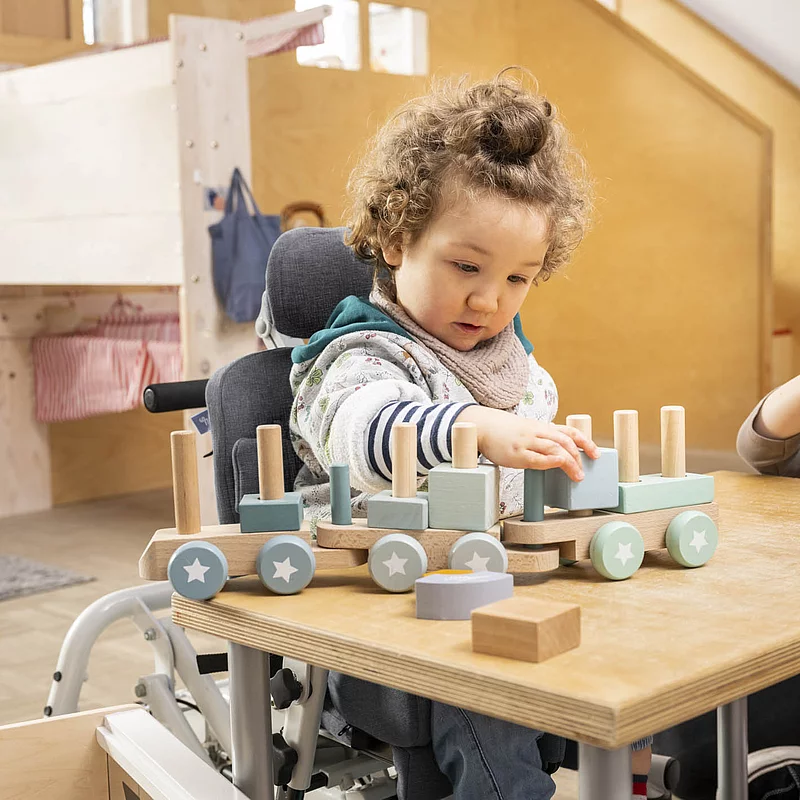
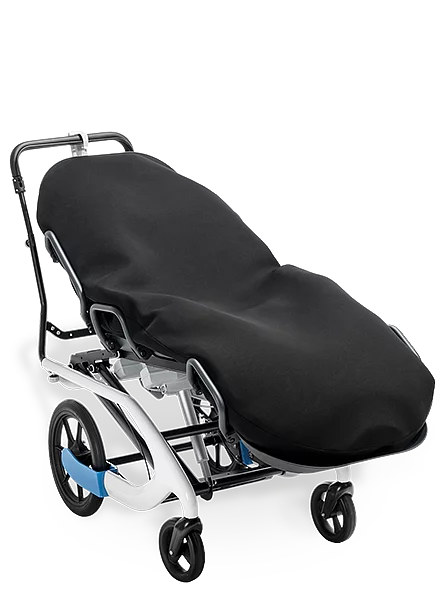
Thanks to our attachment eyelets for transporting the base frame, our tina cradle system is now perfectly suited for use in the car! Approved in accordance with DIN EN 7176-19 for use with the headrest raised to 50°, using a pelvic and shoulder diagonal harness or the vehicle’s three-point harness. If the required angle of elevation cannot be achieved, a medical certificate in accordance with the Third Ordinance on Exemptions from Road Traffic Regulations must be carried in the vehicle!